Explore seven South Asian styles, from Hyderabad to Sindh. These descriptions highlight common features; ingredients and methods vary by household and restaurant.
These are style guides, not complete recipes. They do not appear in ingredient matches. For measured quantities and a complete method, start with our separate chicken biryani draft.
Pakki: the meat is cooked before layering. Kacchi: marinated raw meat is used in the layered cooking method. Dum: the covered finishing stage that traps heat and moisture. Our complete recipe uses cooked chicken first.
Hyderabad · Telangana, India
Hyderabadi
Style guide · not a recipe
Basmati rice, spiced meat, herbs and fried onions are familiar elements. Kacchi methods begin with marinated raw meat; pakki methods use cooked meat before the covered dum finish. Yogurt, mint and warm spices appear in many versions.
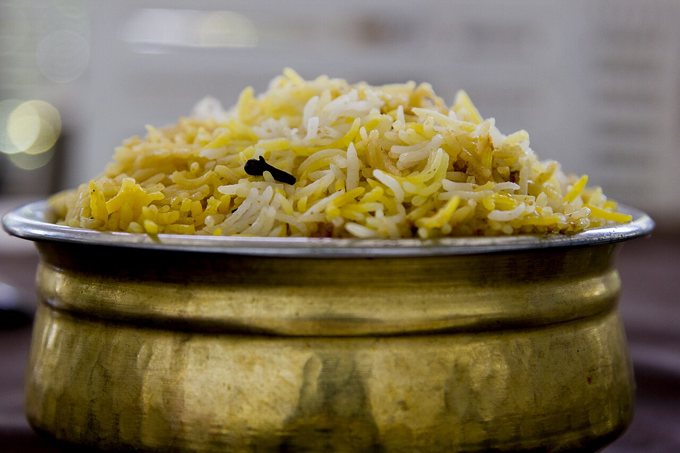
A photograph catalogued as Hyderabadi biryani; its appearance does not establish whether the method was kacchi or pakki. Photo credit
Many versions favour fragrant basmati and whole spices with gentler chili heat. Some use yakhni, a seasoned meat stock. Ghee, saffron or floral waters can add aroma; recipes vary between cooks.
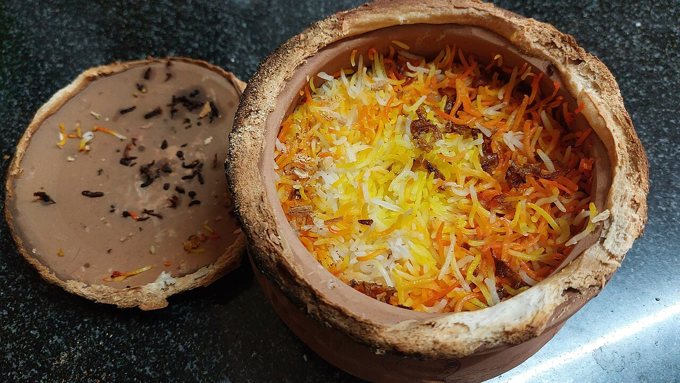
Lucknowi mutton matka dum biryani in a clay pot. This photograph shows mutton, not the chicken recipe on this site. Photo credit
Potatoes are a familiar feature of Kolkata biryani. With roots in Lucknow’s cooking traditions, many versions combine basmati, meat, mild warm spices and fragrant aromatics. Household and restaurant versions differ.
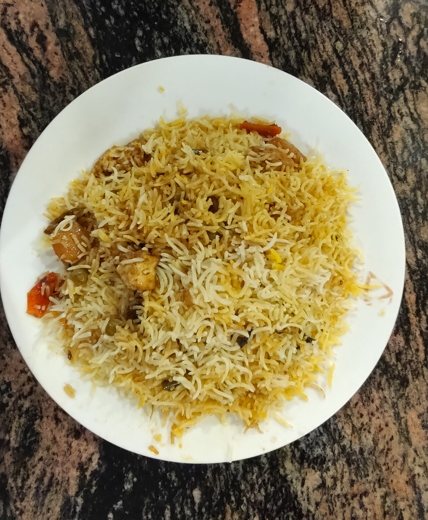
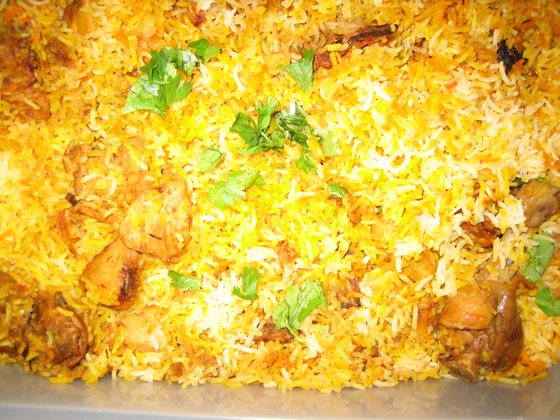
A representative chicken biryani photographed in Kolkata. Visible ingredients are not a complete recipe specification. Photo credit
Small-grained seeraga samba rice is common in Ambur biryani. Red chili paste, yogurt, mint and coriander appear in many recipes. Meat and rice finish cooking together; brinjal curry is a familiar accompaniment.
A representative Ambur chicken biryani with accompaniments. Portions and side dishes vary. Photo credit
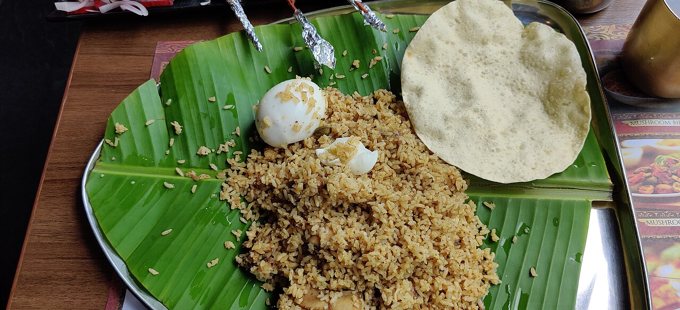
Seeraga samba rice is a familiar choice. The Thalappakatti restaurant’s account describes hand-ground spices and a dum finish. That is one restaurant tradition; it is not a universal recipe or a disclosure of its proprietary spice blend.
Dindigul Thalappakatti biryani with side dishes, photographed by the credited contributor. Photo credit
Kaima, also called jeerakasala, is the characteristic small-grained rice. It differs from Tamil seeraga samba. Layered dum cooking, ghee, aromatic spices and fried onions are familiar features; cashews and raisins often appear.
Prepared Thalassery biryani. The source image is small, so this photograph is used only as a guide illustration. Photo credit
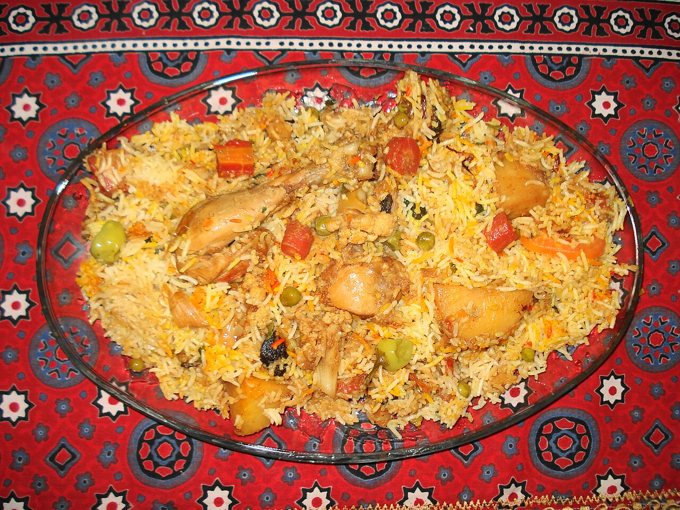
Common examples combine basmati rice and meat with potatoes, tomatoes, green chilies and yogurt. Dried plums can add tartness. Part-cooked rice is often layered over cooked meat. Packaged spice producers provide examples, not rules for every home cook.
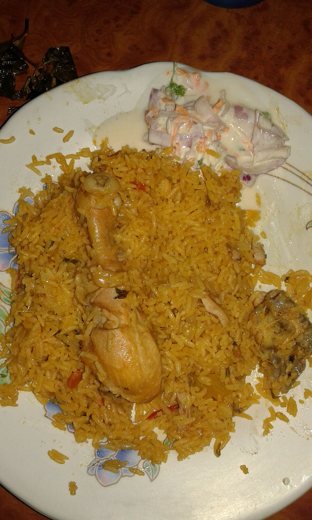
Sindhi biryani photographed by Miansari66. This is a regional guide image, not a tested recipe result. Photo credit