Before you start
Use ordinary aged white basmati rice. Brown rice, instant rice and parboiled sella rice need different methods. Read the whole method before starting. For a double recipe, cook two separate batches with the listed pots. Use half the doubled ingredients in each batch.
Ingredients
Metric weights use grams. US weights use ounces; liquids use fluid ounces. Conversions are rounded. Spoon measures use 5 ml teaspoons and 15 ml tablespoons; cups use 240 ml.
Serves 4
Choose any positive whole number of servings. Ingredients and measured amounts in steps scale together. Times, temperatures and equipment stay unchanged. For larger yields, cook separate original-size batches. Counted ingredients can become fractions; beat eggs before dividing them. Fixed correction-water checks remain fixed.
Main ingredients
Seasoning and finishing
Liquids
Equipment
Kitchen scales; 5 ml and 15 ml measuring spoons; jug; bowl; sieve; 5 litre rice pot; heavy 4–5 litre pot about 24 cm wide with a tight lid; foil; broad spoon; instant-read food thermometer.
Check all product labels and cross-contact. Diet groups describe this listed draft, not every substitution.
Steps
Marinate the chicken · 30 minutes
- Do not wash raw chicken.
- Put 150 g plain full-fat yogurt, 15 g fresh ginger, finely grated, 15 g garlic, finely grated and 15 ml lemon juice in a large bowl.
- Add 6 g fine salt for the marinade, 2 tsp ground coriander, 1 tsp ground cumin, 1 tsp garam masala, ½ tsp turmeric and ½ tsp mild red chili powder.
- Mix the marinade with a spoon.
- Add 750 g raw boneless, skinless chicken thighs, cut into 5 cm pieces.
- Turn the chicken until the marinade coats every piece.
- Cover the bowl.
- Refrigerate the chicken for 30 minutes.
- Wash your hands with soap after handling raw chicken.
- Clean the board, knife and work surface before preparing other ingredients.
Soak the rice · during the marinade · About 30 min
- Rinse 350 g aged white basmati rice (not brown, instant or sella rice) in a sieve under cold running water.
Check: The draining water should become much less cloudy.
- Put the rice in a bowl.
- Cover the rice with 1000 ml cool water for soaking, plus running water for rinsing.
- Leave the rice to soak for 30 minutes.
- Drain the soaked rice in the sieve.
- Warm 45 ml whole milk; use even if omitting saffron in a small saucepan until warm to the touch.
- If using saffron, add 0.1 g saffron threads to the warm milk.
- Leave the milk for at least 10 minutes.
Brown the onions · 15–20 minutes
- Heat 45 ml neutral oil and 20 g ghee in the heavy pot over medium heat.
- Add 250 g onions, peeled and sliced 2 mm thick.
- Cook the onions for 15–20 minutes, stirring every minute.
Check: The slices should become evenly golden brown, without black edges.
- If the edges darken before the centres soften, reduce the heat.
- Transfer half the onions to a plate.
Cook the chicken · 20–30 minutes
- Add 4 green cardamom pods, lightly crushed, 4 cloves, 1 piece cinnamon stick, 5 cm long and 1 dried bay leaf to the onions in the pot.
- Stir the whole spices over medium heat for 30 seconds.
- Add the chicken and all its marinade.
- Add 100 ml water for the chicken.
- Stir the chicken for 3 minutes.
- Cover the pot.
- Reduce the heat to medium-low.
Check: Small bubbles should rise gently through the sauce.
- Cook for 15 minutes, turning the chicken every 5 minutes.
- If the sauce sticks, add 30 ml water from 120 ml extra water, reserved for sticking or firm rice; use only as needed.
- Insert the thermometer into the centres of several large chicken pieces.
Check: Each tested piece must reach at least 74°C / 165°F.
- If any piece is below 74°C / 165°F, cook for another 3 minutes before checking again.
- Remove the lid.
- Simmer for 2–5 minutes, stirring frequently.
Check: The sauce should coat the chicken; no watery pool should remain.
- Turn off the heat.
- Remove the visible bay leaf, cinnamon, cloves and cardamom pods with a spoon.
Part-cook the rice · start the water while the chicken cooks
- Bring 2500 ml water for boiling the rice to a strong boil in the rice pot.
- Add 15 g salt for the rice water; most is drained away.
- Add the drained rice.
- Stir the rice once.
- Boil uncovered for 4 minutes.
- Cool one grain on a spoon before tasting it.
Check: The grain should be nearly tender, with slight central resistance and no hard, crunchy core.
- If the grain is still crunchy, boil for another 30 seconds before checking again.
Check: Soaked rice usually needs 5–8 minutes in total; the texture matters more than the clock.
- Drain the rice immediately in the sieve for 1 minute.
- Do not rinse the hot rice.
Layer the rice · about 3 minutes
- Spread the cooked chicken and sauce across the bottom of the heavy pot.
- Scatter 7.5 g mint leaves, chopped and 7.5 g fresh coriander leaves, chopped over the chicken.
- Spread all the hot rice over the chicken without stirring.
- Scatter the reserved onions over the rice.
- Add the remaining 7.5 g mint leaves, chopped and 7.5 g fresh coriander leaves, chopped.
- Pour all the warm milk over the rice.
- Cover the pot opening with foil.
- Keep the foil edges away from the burner.
- Fit the lid tightly over the foil.
Finish over low heat · 19–24 minutes
- Put the covered pot over medium-low heat for 4 minutes.
- Reduce the heat to its lowest setting for 15 minutes.
Check: Escaping steam is not required; the lid should remain sealed.
- Lift the lid and foil away from your face.
- Taste a cooled rice grain from the centre.
Check: The grain should be tender throughout, with no hard core.
- If the rice is firm, sprinkle 30 ml boiling water from the correction-water allowance over the rice.
- If you added water, cover the pot and cook on low heat for another 5 minutes before checking again.
Rest and serve · 10 minutes
- Turn off the heat.
- Leave the pot covered for 10 minutes.
- Lift portions from the bottom with the broad spoon.
Check: Each serving should contain both chicken and rice.
- Serve the biryani hot.
Tips
- Pakki means the meat is cooked before the rice layers are assembled. Dum is the final covered cooking stage.
- Use a thermometer: colour alone does not establish whether chicken is safely cooked. Check several large pieces.
- Remove the visible whole spices before layering. Some small spices can remain; watch for them when serving.
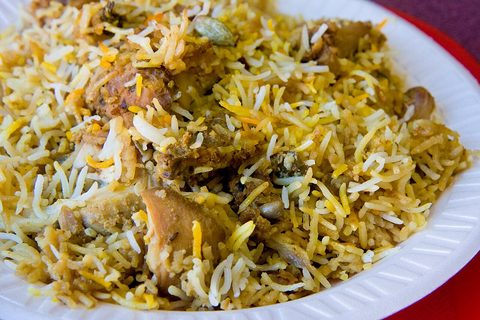
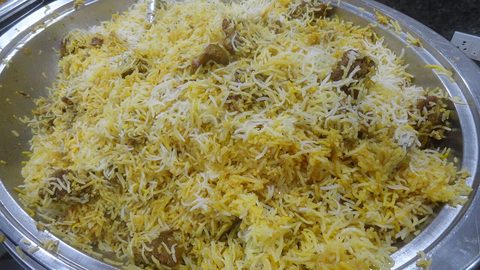
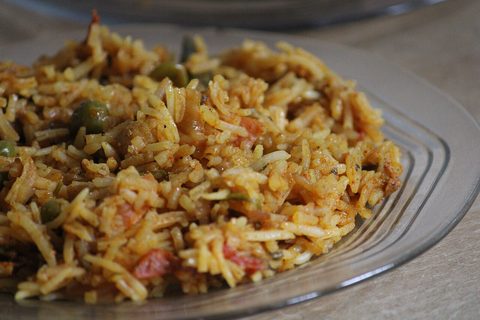
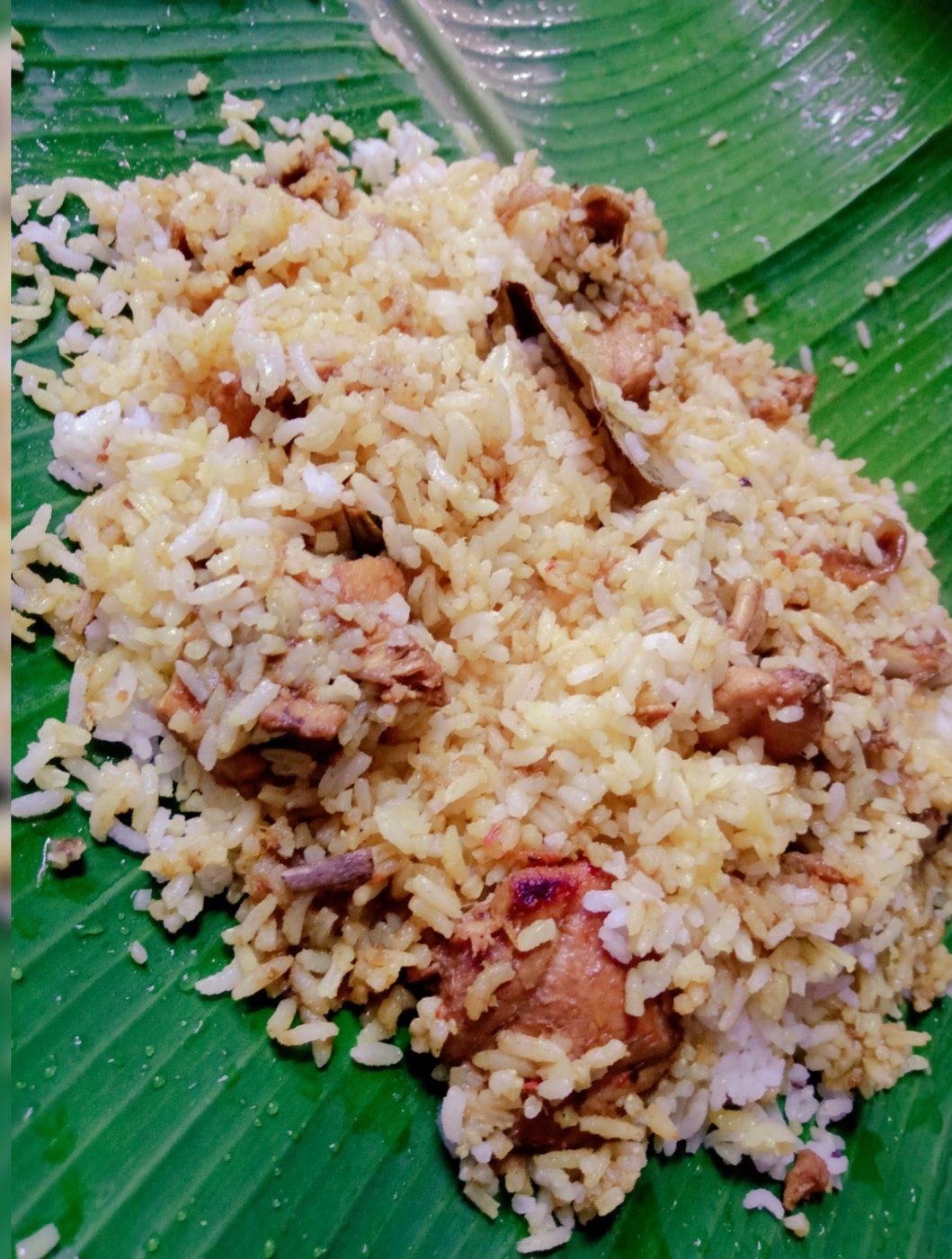
- The photograph shows a different chicken biryani. Its rice, meat cuts and accompaniments do not demonstrate this method.
- Optional serving idea: prepare the separate cucumber raita recipe. It is not included in the ingredients or timing.
Substitutions
- Use unsalted butter instead of ghee; keep the listed quantity.
Storage
- Cool in small shallow portions and refrigerate promptly, ideally within one hour. Use within 24 hours.
- Reheat rice only once, until steaming hot throughout. For this draft, check reheated food reaches 74°C / 165°F. Add a little water and cover while heating.
- For sauces and soups, add a little water if thick and reheat gently. Crisp coatings soften after storage.
Make ahead
- Marinate chicken the evening before; cook rice and assemble on the serving day.
FAQ
Why cook chicken before layering?
The pakki method gives a clear thermometer check before the covered rice finish.
Why is rice sticky?
It may have boiled too long or drained poorly before layering.
How should I store layered chicken biryani?
Cool in small shallow portions and refrigerate promptly, ideally within one hour. Use within 24 hours.
Recipe source and adaptation
Measured home adaptation: Swasthi’s Recipes: Chicken biryani.
A home-style cooked-chicken-first (pakki dum) adaptation, cross-checked against RecipeTin Eats and Flour & Spice. It does not reproduce a definitive regional or restaurant recipe.
Food safety references
FoodSafety.gov: cooking temperatures · Food Standards Agency: rice storage and reheating